This quick tip shows a simple way to deal with leftover concrete on small landscaping projectswithout creating heavy waste.
If you prefer a quick demonstration, watch the short video below. Or keep reading.
As a hard landscaper, you deal with concrete in almost every larger project. It’s in everyone’s interest to do accurate calculations — from the initial estimate through to each stage of the build.
Miscalculations lead to lost profit in business.
On site, that usually translates into wasted time, energy, and materials. Sometimes — frustration. Especially if your shoulders have to suffer because of someone’s repeated miscalculations.
It happens. The real world is not perfect.
Despite your best efforts to guesstimate correctly, you sometimes end up with leftover concrete mix — a little more than you needed.
Maybe the work was interrupted. Maybe you ran out of time. Maybe the estimate was slightly off. Weather. Adjustments during installation. It happens.
The important question is not why it happened, but what you do with the leftover concrete next.
Use the Concrete Instead of Wasting It
Concrete costs money.
The materials, the transport to site, and the labour involved all contribute to the overall project cost. Throwing usable material away should always be the last option.
Whenever possible, find a practical use for the remaining concrete mix.
On most landscaping projects there is usually something small that can benefit from it.
For example:
- small repairs
- stepping stones
- topping up postcrete around timber posts so soil doesn’t touch the wood
- haunching edging or kerbs
- filling small voids or stabilising features
These applications don’t require structural concrete but still benefit from using the remaining mix.
Using the surplus material efficiently helps reduce waste, cost and clean-up time.
Bag the Concrete and Flatten It
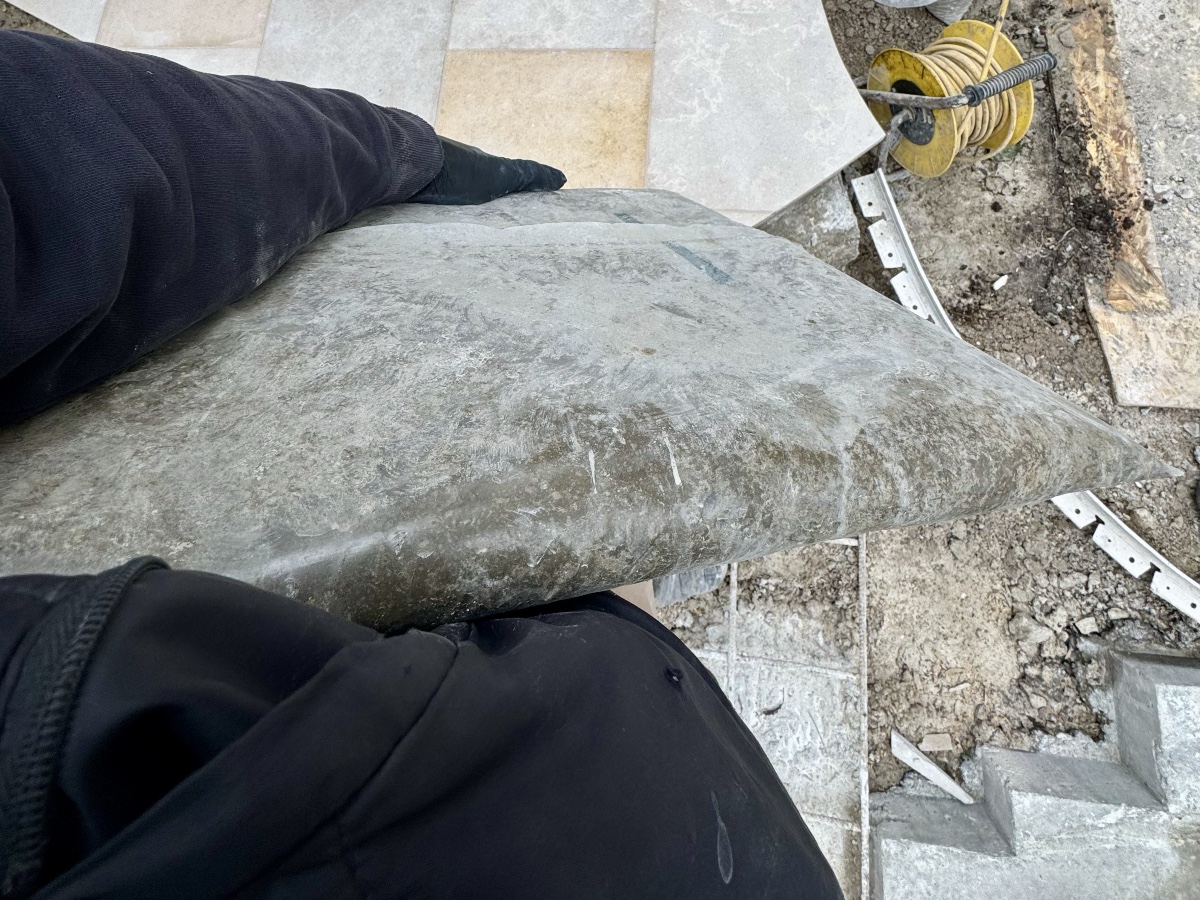
If you can’t use the leftover concrete, you’ll still need to dispose of it properly.
But it shouldn’t end with emptying the mixer into a rubble sack. Don’t create a heavy concrete blob that nobody can lift the next day.
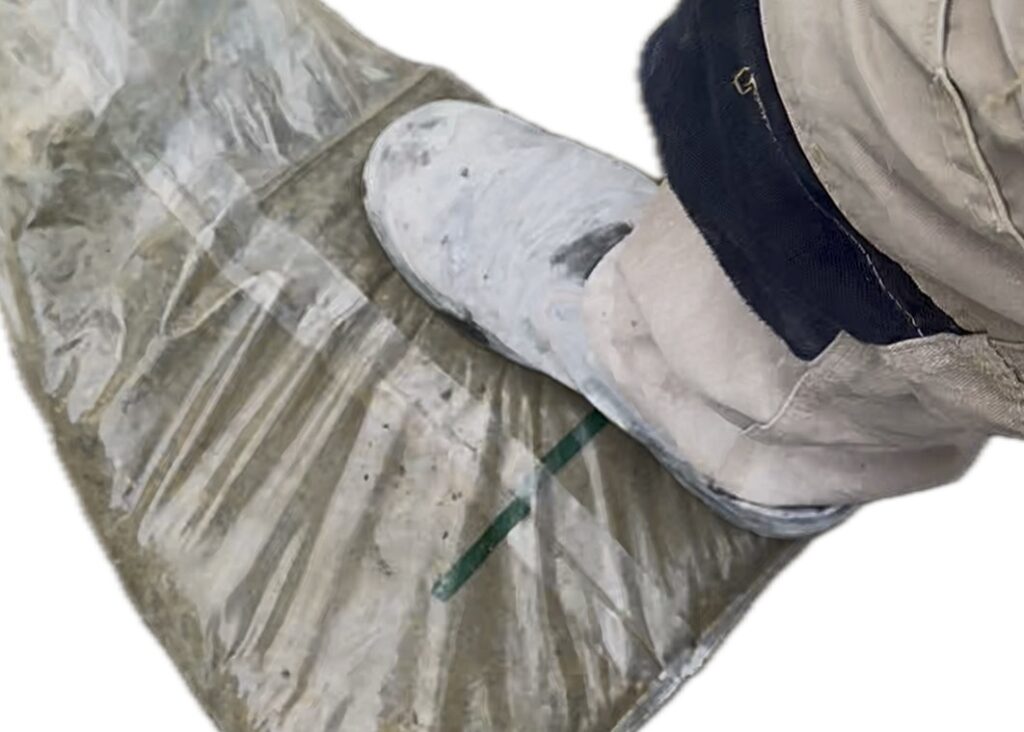
Instead, bag it and flatten the bag on the ground.
You don’t even need a new rubble sack — you can reuse the empty bags from materials already used on site.
This way, the leftover concrete sets into a flat slab rather than a heavy lump.
In my experience, it’s much easier and safer to carry a flat slab through a property than an awkward block.
If the slab is still too heavy, it doesn’t take much effort to break it into smaller pieces. A club hammer is usually all you need.
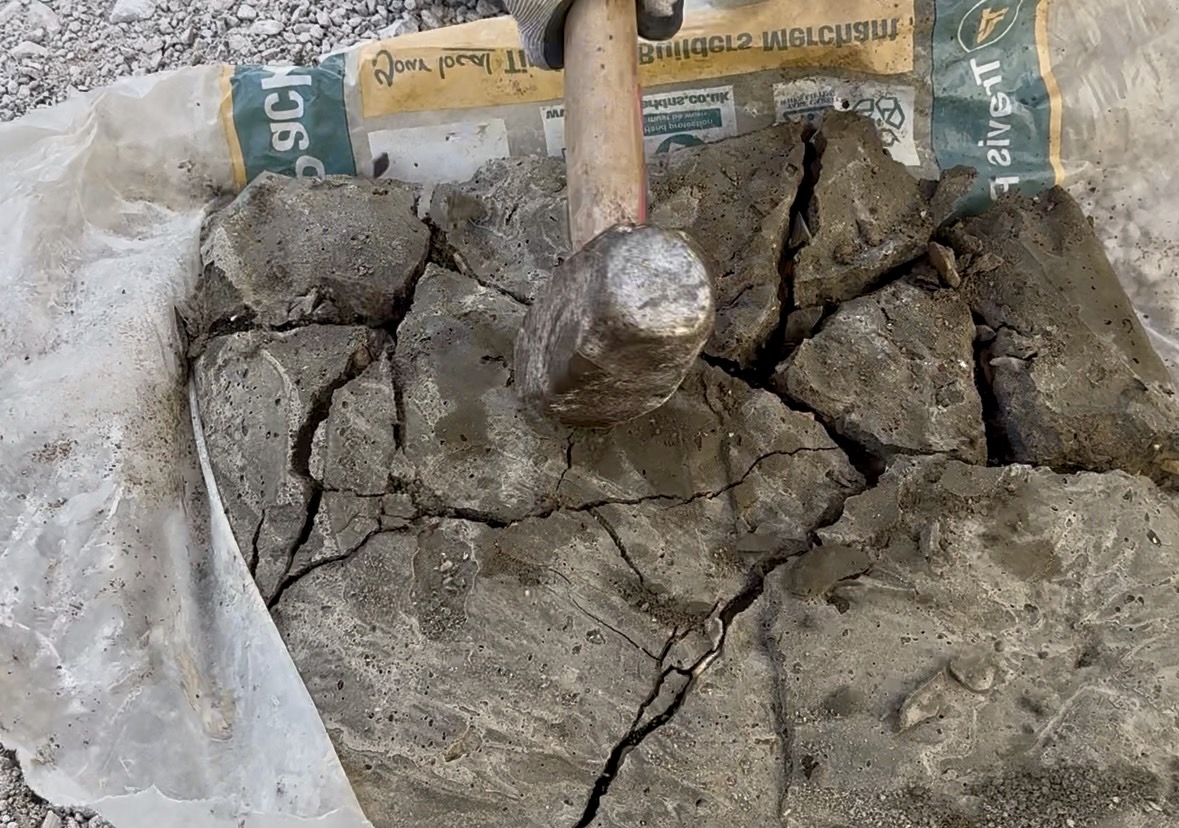
Flattening the bag makes the concrete far easier to handle later — and much easier to break if necessary.
A Small Site Tip That Saves Time and Effort
Leftover concrete is a small issue that appears regularly on landscaping projects.
Handling it properly prevents wasted effort and unnecessary frustration the next day.
If you can use the remaining mix, that’s always the best solution.
If you can’t use it, flattening the bag is one of the easiest ways to deal with the material safely and efficiently.
Sometimes the simplest site tricks make the biggest difference.