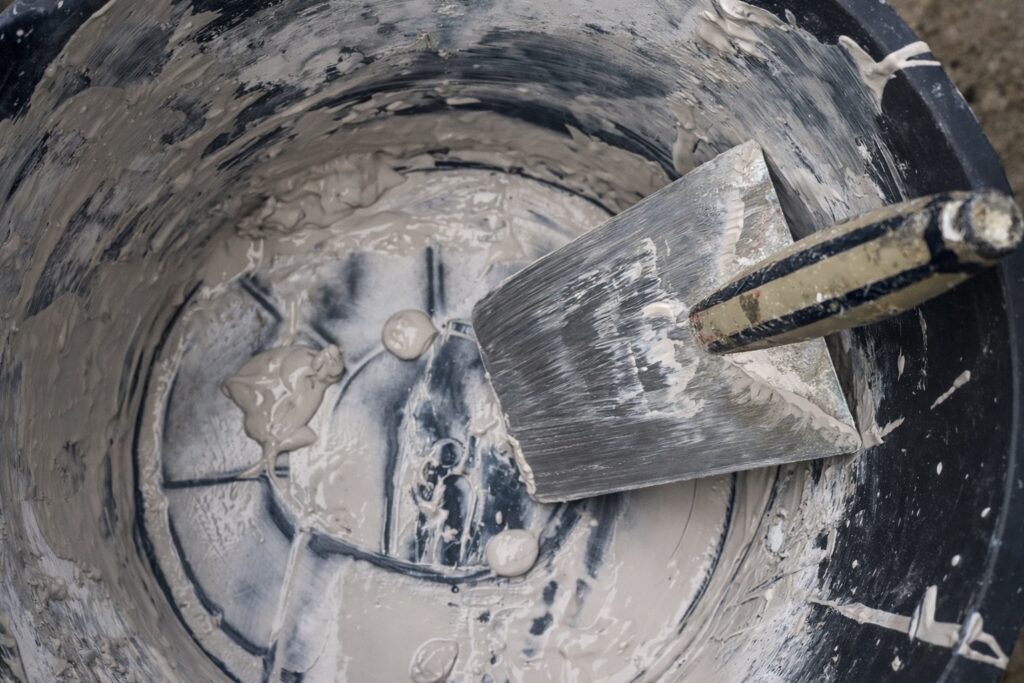
It might sound ridiculous to write an article about cleaning a bucket.
But if you’ve spent any time on site, you’ll know this is one of the quickest ways to tell whether someone works like a professional — or not.
Because buckets don’t get ruined in one job.
They get ruined slowly… one lazy clean at a time.
Although, to be fair, some people have a special talent for ruining one in a single go…
And it’s not just buckets.
The same thing happens with trowels, spades, mixing tools, and of course cement mixers. Poor cleaning habits cost time, money, and effort — and most people don’t even realise it.
Why Cleaning Your Bucket Properly Actually Matters
It’s easy to think, “I’ll just rinse it quickly, it’s only grout.”
But here’s what that leads to:
- Hardened build-up over time
- More effort needed on the next job
- Shorter lifespan of your tools
- Wasted time chipping dried material
- A messy, unprofessional setup on site
Good tradesmen don’t just focus on the finish — they look after their tools as well.
The Common Mistake Most Landscapers Make
Most people don’t clean their buckets properly after grouting.
They’ll:
- Leave residue stuck to the sides
- Give it a quick rinse and call it done
- Let grout dry “just this once”
- Repeat the same habit job after job
Before long, the bucket is coated inside, heavier, unsuitable for other tasks, and a pain to clean properly.
The Simple Method (Takes About a Minute)
This is the exact method I use on site — and it’s quick.
Step-by-step:
1. Add a small amount of water (It doesn’t even have to be clean — just enough to loosen the grout).
2. Whisk it around. Move your trowel or tool through the water to break everything up.
3. Scrub the sides. Don’t just swirl it — actually clean the walls of the bucket.
4. Empty and repeat. One quick rinse isn’t enough.
5. Finish with an old sponge. This removes the final film and leaves it properly clean.
What “Clean” Actually Means
Here’s the standard to aim for:
Your bucket should look the same as it did before grouting.
That means:
- No grout film
- No build-up on the sides
- No hardened residue
- No “that’ll do” finish
If you can still see a layer of grout — it’s not clean.
This Applies to More Than Just Buckets
Once you start paying attention, you’ll notice the same issue everywhere:
- Trowels covered in dried mortar
- Spades caked in concrete
- Clay soils sticking and hardening on tools
- Mixing buckets full of old material
- Cement mixers building up layer after layer
- Spirit levels becoming hard to read because the bubble is covered
The rule is simple:
Clean immediately — or deal with it later.
And “later” is always harder.
The Real Cost of Not Cleaning Properly
Skipping proper cleaning doesn’t save time — it just delays the problem.
Here’s what it actually costs you:
- Time spent scraping hardened material
- Damaged or worn-out tools
- Extra effort on every job
- Poor organisation on site
And one more thing people forget…
Clients notice.
A clean, organised setup gives a completely different impression to a messy one.
Professional Habits vs Amateur Habits
Amateur approach:
- “I’ll clean it later”
- Quick rinse and done
- Leaves residue behind
Professional approach:
- Cleans during use when possible
- Cleans immediately after use
- Uses minimal water efficiently
- Keeps tools ready for the next task
- Maintains consistent standards
It’s not about perfection — it’s about discipline.
Simple Tips That Make a Big Difference
- Don’t overfill the bucket — you only need a small amount of water
- Clean straight after use, not at the end of the day
- Keep an old sponge just for this job
- Build the habit — do it the same way every time
Final Thought
This isn’t really about cleaning a bucket.
It’s about how you work.
Small habits like this are what separate tidy, efficient jobs from messy, time-wasting ones.
And once you get into the routine, it takes less than a minute — but saves you a lot more in the long run.