What builders and hard landscapers should know
Many plants used in landscape design are selected for their shape, texture, and reliability. However, some require careful handling during construction or maintenance.
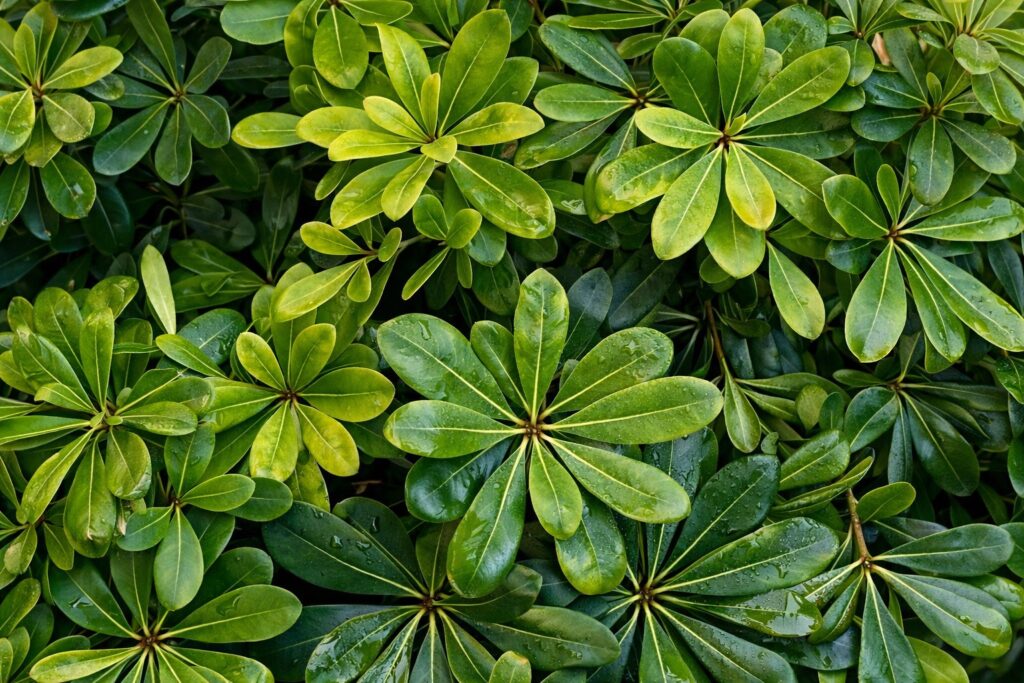
One of these plants is Pittosporum tobira ‘Nanum’ — a compact evergreen shrub commonly used in contemporary planting schemes.
This article focuses on practical information for builders, hard landscapers, and contractors working around planted areas.
Quick facts
Plant: Pittosporum tobira ‘Nanum’
Type: Compact evergreen shrub
Typical height: 60–90 cm
Typical width: 90–120 cm
Growth rate: Slow
Common use: Low shrubs, mass planting, containers, formal landscapes
Designers often choose this plant because it naturally stays compact and dense without heavy pruning.
The main issue on site: brittleness
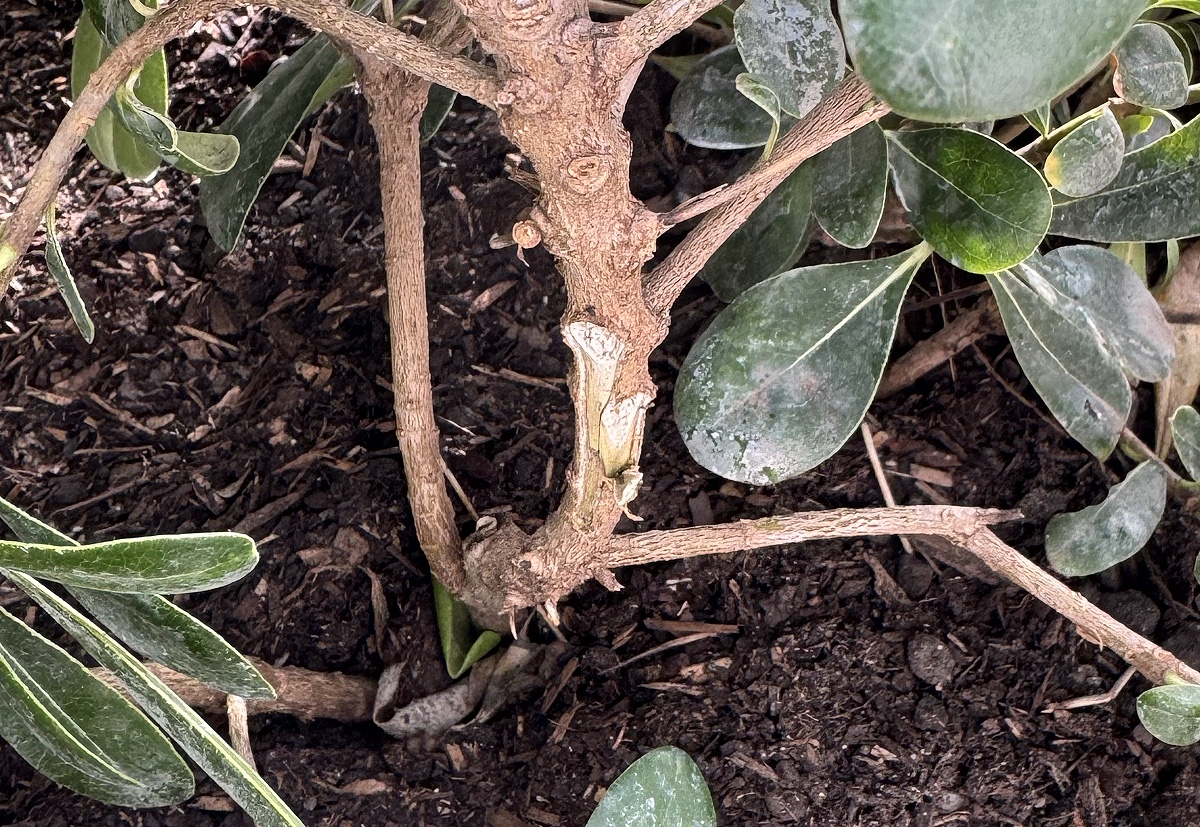
In the picture above, close-up of typical damage — branches often snap at the base where they join thicker stems.
Despite its robust appearance, Pittosporum ‘Nanum’ is extremely brittle.
Branches can snap very easily from:
- sneezing next to the plant (just joking)
- brushing against the plant
- leaning tools or materials on it
- stepping into planting beds
- accidental knocks from equipment
- running cables or hoses over it
- lack of experience when removing plants from pots and planting them
Even light pressure can break stems.
The damage is often not obvious
One of the frustrating characteristics of this plant is that damage may not be visible immediately.
Broken stems can remain green for several weeks, which means:
• the plant may appear fine at handover
• gaps only become visible later
• the issue may be blamed on maintenance rather than site damage
Why broken branches are a problem
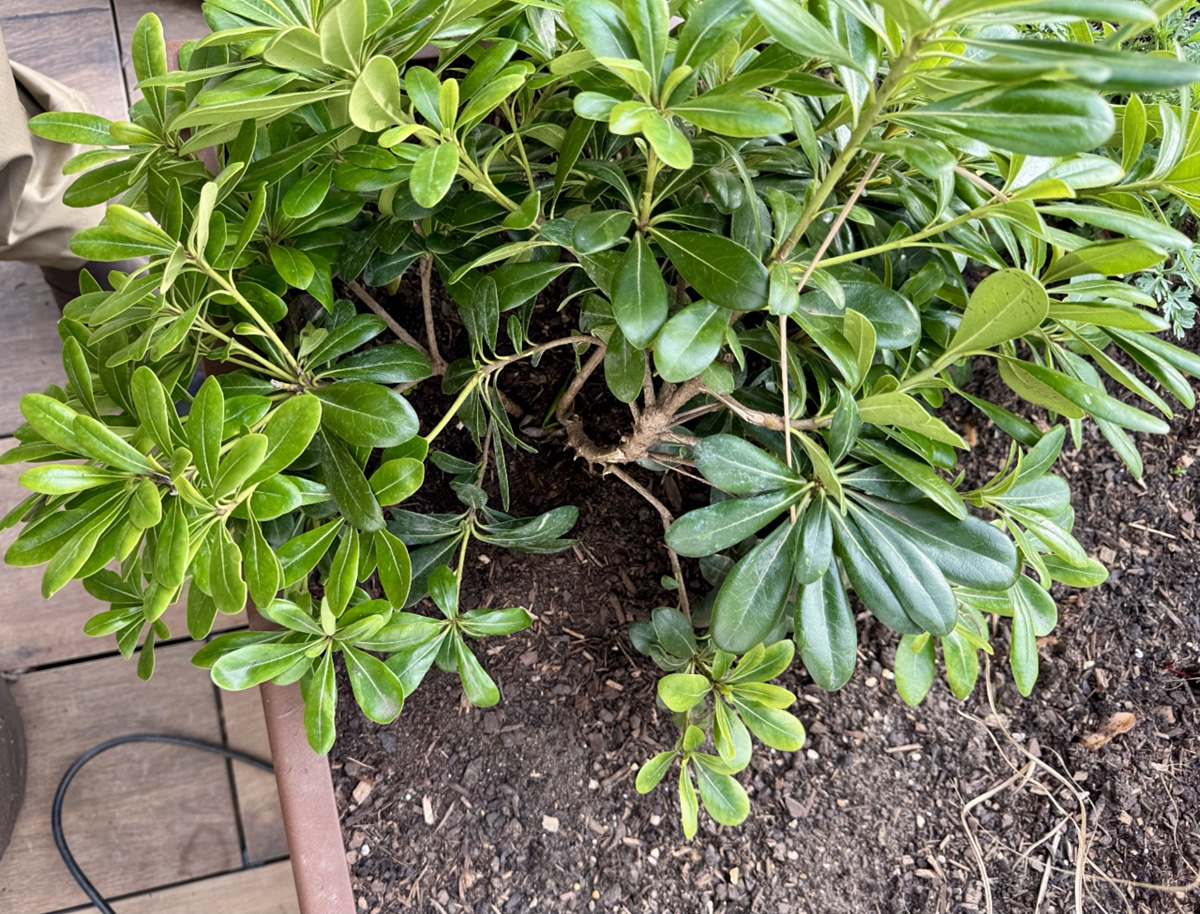
Pittosporum ‘Nanum’ forms a tight, dense canopy.
When a branch breaks:
- it creates a visible gap
- the structure of the plant is disrupted
- the shrub loses its symmetrical form
Unlike faster-growing shrubs, this plant takes a long time to fill in again.
In some cases, replacement becomes the only realistic option.
How to avoid damage on site
If Pittosporum ‘Nanum’ is present on site, simple precautions can prevent problems.
Best practices:
- Store plants away from busy areas. Position more robust plants in front of Pittosporums to help prevent accidental damage.
- Avoid placing materials near planting beds.
- Keep foot traffic out of planted areas.
- Do not use the shrub as support when working nearby.
- Protect newly planted areas during construction.
- Be careful when moving equipment close to plants.
Why designers keep using it
It may not be the best plant for gardens with dogs or areas used for ball games. Nevertheless, it is still worth considering.
Despite its fragility, Pittosporum ‘Nanum’ remains a popular landscape plant because it:
- maintains a clean, rounded shape
- stays compact without constant trimming
- provides year-round evergreen structure
- works well in modern planting schemes
It simply needs a bit more respect during construction.
Plants for Builders series
This article is part of the “Plants for Builders” series — short guides explaining plants commonly encountered on construction sites.
The aim is simple:
help people working around landscapes avoid accidental plant damage.