Urban foxes are now a familiar sight across many parts of the UK. While some people enjoy seeing wildlife, foxes in the garden can quickly become a nuisance.
Homeowners often deal with problems such as:
- Lawns being dug up
- Flower beds destroyed
- Damaged lighting cables and irrigation lines
- Rubbish scattered around the garden
- Foxes using gardens as regular pathways, leaving dirt marks on walls
- Strong-smelling urine and faeces left around the garden
For many people, the goal is simple — to create a fox-free garden.
One method sometimes used is installing anti-climb spikes along the tops of fences or walls. But how effective are they at stopping foxes?
What Are Anti-Climb Spikes?
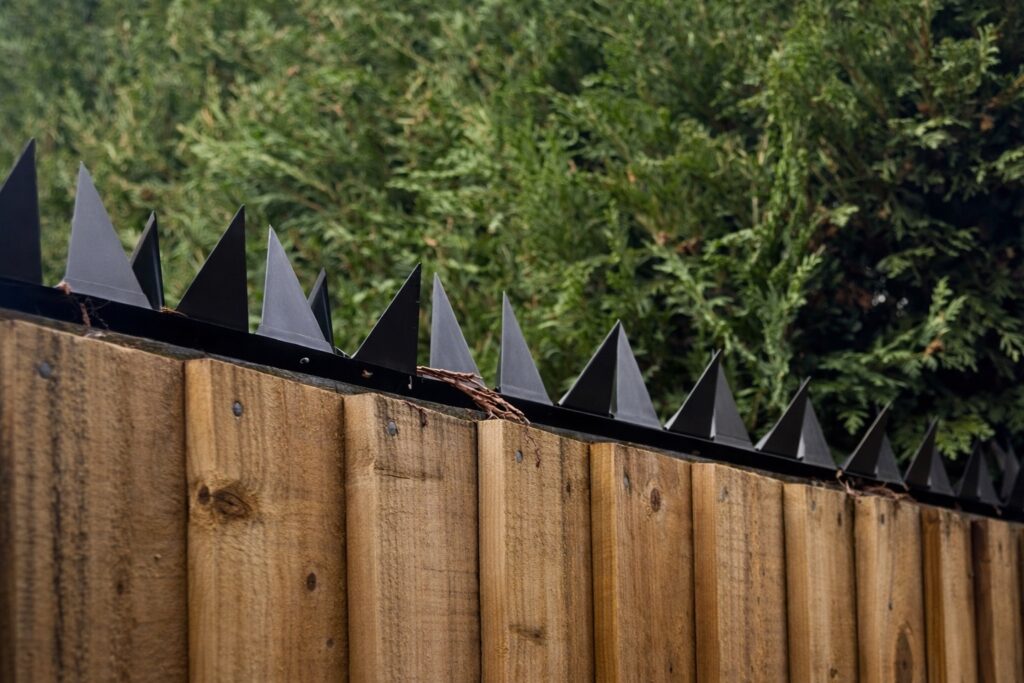
Anti-climb spikes are strips of plastic or metal spikes fixed to the tops of fences, gates, and walls to prevent animals or people from climbing over them.
They are commonly used for:
- Preventing birds from landing on surfaces
- Stopping cats from walking along fence tops
- Increasing security on walls and fences
- Acting as a deterrent for climbing animals
Products such as Stegastrip anti-climb spikes are designed to create an uncomfortable surface to land on, without causing serious harm.
Possible Downsides
Anti-climb spikes also have a few drawbacks:
- They rarely look attractive on garden fences or walls
- They are not 100% effective against determined animals
- Some neighbours may object, especially if they have cats that regularly walk along fences
In some cases, neighbours’ cats may no longer be able to freely cross into your garden or use it as a toilet, which can occasionally lead to complaints.
Can Foxes Climb Fences?
Yes — foxes are extremely agile animals. Here in London you can see foxes on the tops of the building roofs sometimes.
A fox can:
- Jump up to around 2 metres
- Climb certain types of fencing
- Use nearby structures such as sheds, bins, walls, or trees to gain access
Because of this, many gardens that appear secure can still be accessed by foxes.
Foxes are curious and opportunistic. If they discover an easy route into a garden, they will often return repeatedly.
Do Anti-Climb Spikes Stop Foxes?
Anti-climb spikes can help reduce fox access, but they are not a guaranteed solution on their own.
They can:
- Make fence tops uncomfortable for landing
- Prevent animals from walking along fence lines
- Act as visual deterrent
- Reduce climbing opportunities
However, foxes are adaptable animals. If they are motivated to enter a garden, they may still:
- Jump directly over a fence
- Find another entry point
- Dig underneath fencing
- Use nearby objects to bypass the spikes
For this reason, spikes should be seen as one part of a wider fox deterrent strategy rather than a complete solution.
Where Spikes Work Best
Anti-climb spikes tend to work best when they are:
- Installed continuously along the entire fence or wall
- Used in areas where foxes regularly travel
- Combined with other deterrent measures
Any gaps in the spikes can quickly become access points.
Creating a Fox Free Garden
The most effective way to keep foxes out of a garden is through a layered approach.
This may include:
- Blocking gaps under fences
- Removing accessible food sources
- Securing bins and compost
- Using motion-activated lighting or deterrents
- Installing physical barriers such as spikes or fence rollers
The goal is to make the garden less attractive and more difficult for foxes to enter.
Final Thoughts
Anti-climb spikes can be a useful addition when trying to protect a garden from foxes. They can discourage climbing and reduce certain entry points.
However, there is rarely a single method that will completely stop fox activity.
Creating a fox-free garden usually involves identifying how foxes are entering the property and combining several deterrent methods to reduce access.
In some smaller gardens — particularly in dense urban areas such as parts of London — it can be possible to significantly reduce or even eliminate fox visits with the right approach.
On the other hand, there are many gardens where fully securing the space against foxes is simply not realistic using reasonable measures.